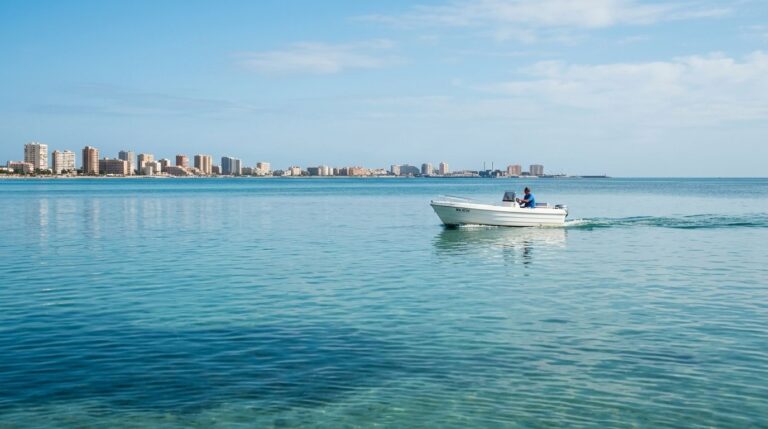
The western Mediterranean has some of the best boating weather in Europe. Long, warm seasons, clear water and hundreds of anchorages within reach of the Costa Cálida and Costa Blanca. But the same climate takes a toll on boats in ways that surprise owners who come from cooler waters.
Sun and UV
Strong sunshine for most of the year is the biggest single cause of cosmetic and material damage we see.
- Gelcoat chalks and fades, especially on dark hulls.
- Upholstery cracks, fades and splits at the seams. Thread can rot long before the fabric fails.
- Canopies, biminis and covers lose their waterproofing and colour.
- RIB tubes, particularly PVC, degrade faster in strong UV.
- Plastic fittings, cable ties and hoses go brittle.
Protection: a fitted boat cover, UV protectant on vinyl and tubes, marine-grade UV-resistant thread when recovering seats, and polishing and waxing the gelcoat at least once a year.
Heat
Engine rooms on a summer afternoon can get extremely hot. Heat shortens the life of rubber hoses, impellers, belts, batteries and electronics, and it reduces engine performance. Warm sea water also makes cooling systems work harder.
Protection: keep cooling systems in top condition, make sure engine room blowers and ventilation work, and replace rubber components on schedule rather than waiting for failure.
Salt
Salt is everywhere: in the water, the air and the spray. It crystallises in cooling systems, attacks electrical connections and corrodes stainless steel and aluminium.
Protection: flush engines with fresh water after every trip, rinse the boat thoroughly, use tinned marine cable and protected connectors, and keep anodes fresh.
Marine growth
Warm, sunny water means fast growth of weed, slime and barnacles on hulls, propellers, intakes and sterndrives. A fouled hull can noticeably reduce speed and increase fuel use.
Protection: annual antifouling, regular use of the boat, mid-season hull cleaning, or dry storage for boats used occasionally.
Wind: Levante, Poniente and sudden changes
Two winds dominate this coast. The Levante blows from the east, building a short, steep sea that can make harbour entrances uncomfortable and the coast a lee shore. The Poniente blows from the west, often hot and dry, and can get up quickly in the afternoon. Thermal sea breezes also build through the day in summer.
What it means for your boat:
- Mooring lines, cleats and fenders work hard, and chafe is common.
- Anchors drag in poor holding.
- Engines that are only marginally reliable fail when you need them most.
Protection: check the forecast (AEMET publishes coastal forecasts), maintain your engine, carry a good anchor with enough chain and line, and replace worn mooring lines.
Saharan dust (calima)
Several times a year, southerly winds carry fine dust from North Africa. Rain during a calima can leave the boat coated in orange mud. The dust is abrasive, clogs air filters and stains canvas.
Protection: rinse gently with plenty of fresh water before wiping, so the dust doesn’t scratch the gelcoat. Check engine air filters afterwards.
Storms and autumn rain
Autumn can bring short, intense rainstorms and episodes known locally as DANA. Cockpit drains, bilge pumps and batteries need to be in good order so that a boat on its mooring can cope with heavy rain while you’re away.
Summary: a Mediterranean care routine
- Flush and rinse after every trip.
- Cover the boat when it isn’t in use.
- Service cooling systems and replace rubber parts on schedule.
- Antifoul annually or use dry storage.
- Keep batteries, bilge pumps and float switches in perfect order.
- Check mooring lines and fenders regularly.
Need a hand? We look after boats from Torrevieja to Cartagena. Get in touch or book a service.