Where you keep your boat is one of the biggest decisions you make as an owner. It affects how quickly the hull fouls, how hard the engine and electrics have to work, how secure the boat is and, of course, how much it costs. Here’s an honest comparison of the main options on the Costa Cálida, the Mar Menor and the southern Costa Blanca.
1. Marina berth (in the water)
Pros: ready to go whenever you are, with shore power, water and security at most marinas, and a social life on the pontoon.
Cons: marina berths can be expensive and hard to find in the busiest areas, especially in summer. The hull, drive and propeller foul in warm water, so you’ll need annual antifouling and regular anode changes. There’s a small but real risk of sinking from failed bilge pumps, hoses or bellows.
Best for: boats used frequently through the season, and larger cruisers that are difficult to lift.
2. Swing mooring or buoy
Pros: cheaper than a marina berth.
Cons: you need a tender to reach the boat, and there’s no shore power for charging. The boat is more exposed to wind and swell, so mooring lines and the mooring itself need regular inspection. Rules on moorings in the Mar Menor and along the coast are strict, so check what’s permitted.
3. Dry stack storage
Boats are stored on racks in a building or yard and launched by forklift when you want them.
Pros: no fouling, so often no antifouling needed. Protected from the sun and weather if under cover. Generally very secure. Many facilities launch your boat on request.
Cons: limited to boats of a certain size and weight, typically smaller motorboats with outboards. You usually need to book launches in advance.
Best for: day boats, RIBs and outboard boats up to around 8 to 10 metres, depending on the facility.
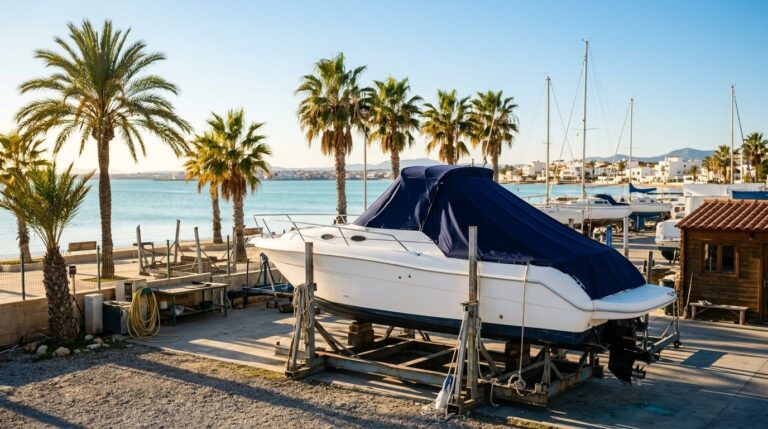
4. Hard standing (boatyard storage on a cradle)
Pros: the cheapest way to store a boat out of the water long-term, and the best place to do antifouling, gelcoat repairs, engine work and winterising.
Cons: the boat isn’t ready to use at short notice. It’s exposed to sun and dust unless covered, and needs to be lifted in and out.
Best for: winter lay-up, long periods away and refit work.
5. Boat lifts
A boat lift raises the boat out of the water at its berth or a private dock, using a cradle or platform.
Pros: the boat stays out of the water, so it doesn’t foul, and you can use it whenever you want. It also eliminates the risk of sinking on the mooring.
Cons: you need a suitable berth or dock and permission to install the lift, plus the up-front cost of the lift.
6. Trailer storage at home
Pros: cheap and convenient if you have the space, and you can work on the boat at home.
Cons: you need a suitable vehicle and licence for towing, and you have to launch and recover at a slipway every time. Trailers need regular maintenance of bearings, brakes and lights, especially after salt water.
Preparing a boat for storage
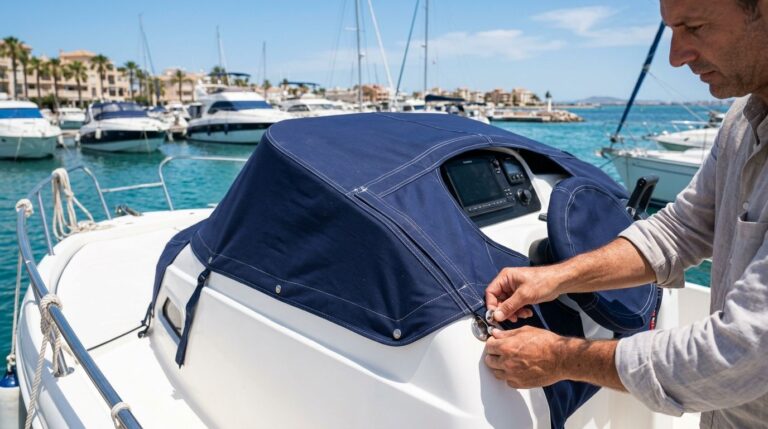
Whatever you choose, a boat stored for weeks or months needs proper preparation: engine flushed and protected, batteries charged and isolated, fuel treated, interior ventilated and a well-fitted cover. Our winterising guide covers this step by step.
Security
- Use an outboard lock and a trailer lock.
- Remove portable electronics.
- Photograph your equipment and keep serial numbers.
- Tell your insurer where the boat is stored.
Our lifts and storage service
We arrange boat lifts, launching and recovery, and storage with preparation and regular checks, so your boat is ready when you are. See our boat lifts and storage page or ask for a quote.