In the Spanish sun, a cover is one of the best investments you can make for your boat. It protects upholstery, consoles, electronics and gelcoat from UV, keeps rain and Saharan dust out of the cockpit, and deters birds and casual theft. Here’s everything you need to know.
Types of boat cover
Console covers. Small covers for the helm and electronics on open boats and RIBs. Quick to fit and remove.
Cockpit covers. Cover the cockpit from the windscreen to the transom. The most popular option for sports boats and day cruisers.
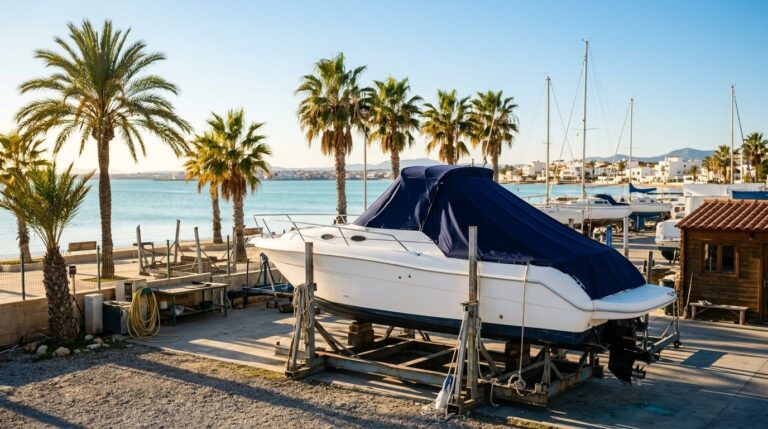
Full or mooring covers. Cover the whole boat down to the rubbing strake. Ideal for winter storage and boats left for long periods.
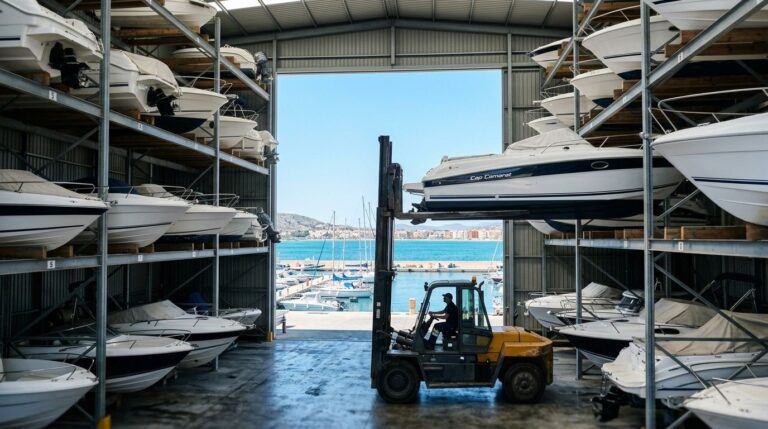
Storage and travel covers. Heavy-duty covers designed for boats on trailers or in dry storage, with straps that hold them securely while towing.
Seat and cushion covers. Individual covers for helm seats, sunpads and leaning posts.
Bimini tops and canopies. Not strictly covers, but they protect the crew and cockpit from sun while you’re on the water.
Materials
Solution-dyed acrylic canvas is the most common choice for quality covers. It’s breathable, colourfast, resists UV and repels water. Good for long-term use in strong sun.
Polyester is cheaper and lighter. It suits trailer covers and lower-budget options, but it usually fades and loses waterproofing faster in strong UV.
PVC-coated fabrics are fully waterproof but don’t breathe, which can trap condensation and cause mould. Use with good ventilation.
Thread. UV-resistant PTFE thread lasts much longer than standard polyester thread, which often rots in the sun before the fabric fails. For covers in Spain, it’s worth paying for.
Fit matters
A cover that flaps in the wind wears itself and your boat out. Tailored covers fit around the windscreen, rails and fittings, with:
- Correct tension so that water runs off rather than pooling.
- Support poles or a frame to stop rain collecting in the middle.
- Ventilation panels to let moisture escape and prevent mould.
- Reinforced patches where the cover touches the windscreen, rails and cleats.
- Secure fastenings: press studs, twist locks, elastic shock cord and straps.
Caring for your cover
- Rinse with fresh water regularly, especially after a calima or salty spray.
- Clean with a mild soap and a soft brush. Avoid harsh detergents that strip the water-repellent finish.
- Let it dry fully before folding and storing it, to prevent mould.
- Re-proof acrylic canvas every couple of years with a suitable fabric treatment.
- Check the stitching and fastenings every season and repair small problems early.
- Don’t fold sharply across clear vinyl windows, which crack.
Common problems
- Pools of water from poor tension or no support pole, which stretch the fabric and leak.
- Mould from covers fitted over wet cushions or with no ventilation.
- Chafe holes where the cover rubs on the windscreen frame.
- Faded, brittle press studs and cords.
- Rotted thread at the seams.
When to replace
If the fabric tears easily, the waterproofing is gone or the seams are failing everywhere, it’s time for a new cover. Often, though, re-stitching and new fastenings will give a good cover several more years.
Covers and upholstery together
A good cover protects your upholstery, and new upholstery deserves a good cover. We recover boat seats and sunpads in marine-grade vinyl and can advise on covers to keep them looking new. See our boat upholstery service and our guide to boat storage.