The temperature gauge creeps up, the alarm sounds and the family looks at you. Overheating is by far the most common problem we’re called out to in the summer months, especially in the warm shallow waters of the Mar Menor. The good news is that the cause is usually simple, and often preventable.
First: what to do on the water
- Throttle back to idle immediately and, if it’s safe, stop the engine. Running an overheating engine can warp heads and damage seals.
- Check your position and the conditions. If you’re drifting toward rocks, shallows or a busy channel, put the anchor down first.
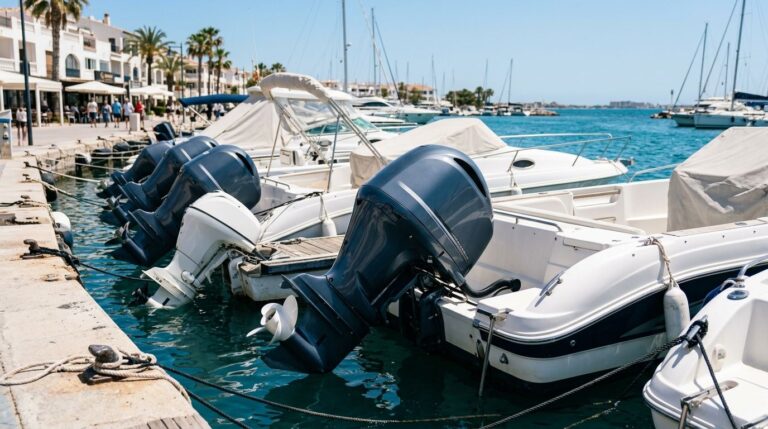
- Check for cooling water. On an outboard, look at the telltale stream. On an inboard or sterndrive, check whether water is coming out with the exhaust.
- Check the raw water strainer on inboards and sterndrives. Weed, plastic bags or jellyfish fragments are common culprits. Close the seacock before opening the strainer.
- Check the intakes on the leg or hull, if you can safely see them. In the Mar Menor, mud and weed are often sucked in when boats run in very shallow water.
- Let the engine cool before opening any pressurised cooling cap.
If you can’t find the cause, or the engine overheats again quickly, call for help rather than trying to limp home at high revs. Our rescue at sea service covers exactly this.
The usual causes
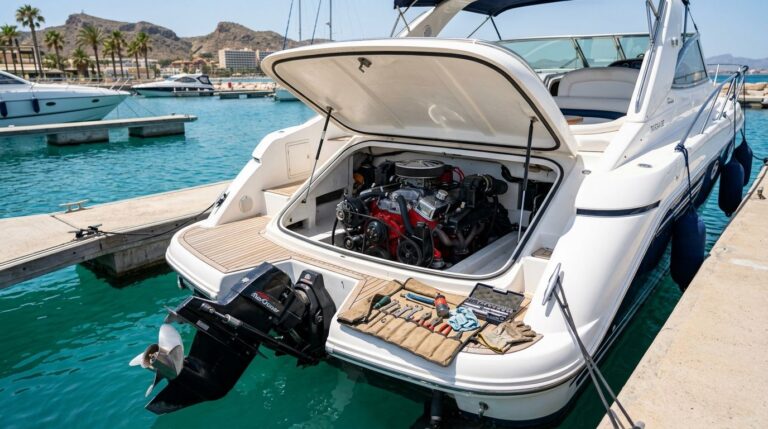
Worn or failed impeller. The rubber impeller in the raw water pump is a wear item. It hardens with age, loses vanes when run dry and gradually stops pumping enough water. This is the most common cause of overheating by far. Replace it at least every year or two, as your engine manual advises.
Blocked strainer or intake. Weed, sand, plastic and shells. Clean the strainer regularly, and before every trip in the Mar Menor.
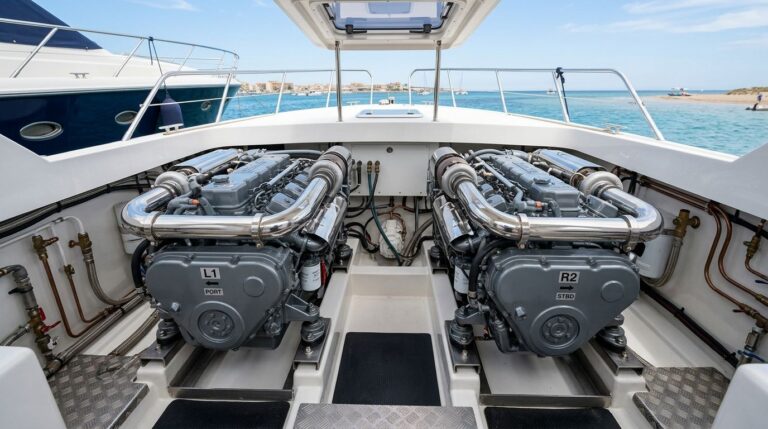
Scaled or blocked heat exchanger. On freshwater-cooled engines, salt water passes through a heat exchanger. Scale and broken impeller vanes block the tubes. Symptoms: gradual temperature rise, especially under load.
Exhaust elbow or riser blockage. Carbon and corrosion can restrict the water flow where it mixes with the exhaust.
Faulty thermostat. A thermostat stuck closed will cause overheating; one stuck open causes the engine to run cold, which is also bad for it.
Low coolant or a failed pump on freshwater-cooled engines.
Fouled hull or propeller. A heavily fouled hull makes the engine work harder for the same speed, which raises the temperature. It’s often overlooked.
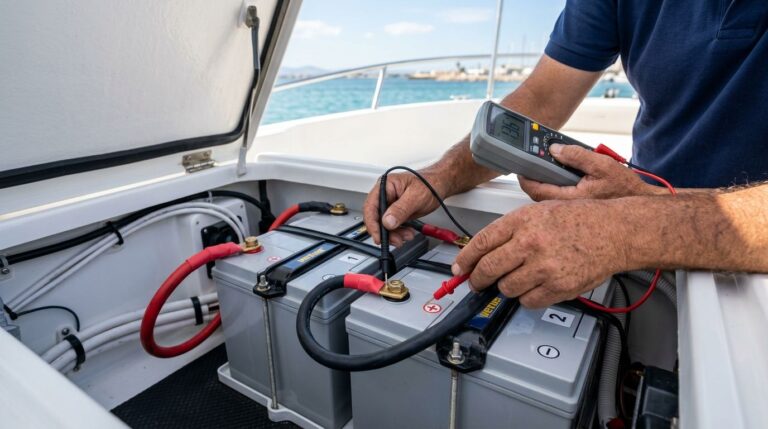
Faulty sender or gauge. Sometimes the engine is fine and the reading is wrong. We test this with an infrared thermometer and a multimeter before replacing anything expensive.
How to prevent overheating
- Replace the impeller at the interval in your manual, and never run the engine dry.
- Clean the strainer before every trip.
- Flush outboards and sterndrives with fresh water after use.
- Have the heat exchanger and aftercooler cleaned during the annual service on higher-hour engines.
- Keep the hull and propeller clean with regular antifouling.
- Avoid running in very shallow, muddy water where possible.
When to call a professional
If your engine has overheated badly, have it checked before using it again. Overheating can damage head gaskets, exhaust manifolds and seals, and these problems are much cheaper to fix early. Our fault finding service diagnoses the cause properly, and we always quote before we repair.