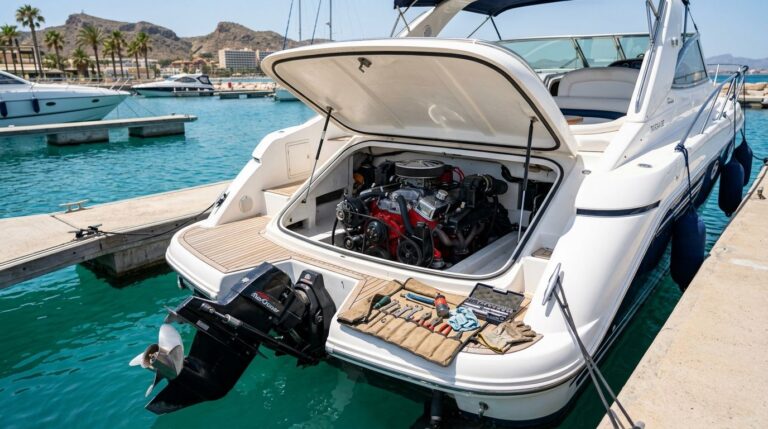
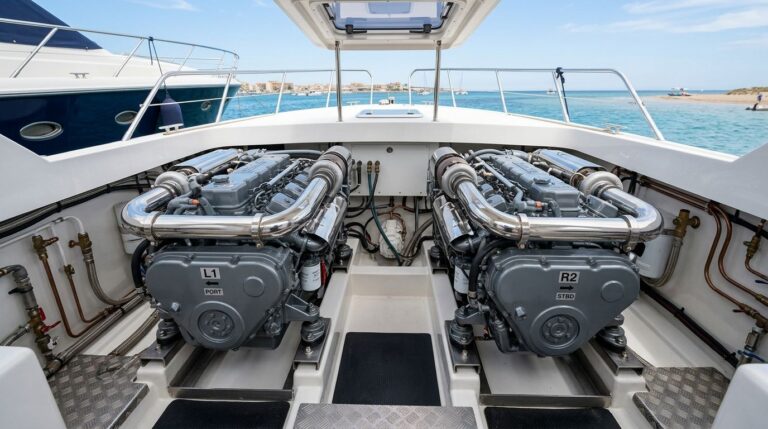
Most boat owners are not engineers, and they shouldn’t have to be. But knowing what a good boat mechanic should do gives you confidence that the work has been done properly, and it helps you spot the shortcuts that cost money later.
Here is what you should expect from any marine mechanic, ourselves included.
Before any work starts
They should listen. A good mechanic asks what the boat has been doing: when it started, whether it is getting worse, what has been done recently. The owner often has the most useful clue.
They should give you a clear quote. For routine servicing that means a fixed price for a defined list of work. For fault finding it means an agreed diagnostic charge and a promise to call you before any repair is carried out.
They should check the paperwork. Your engine’s serial number, hours and service history tell the mechanic which parts and intervals apply. If your boat is still under warranty, servicing has to follow the manufacturer’s schedule with suitable parts, so make sure your mechanic knows.
During the service
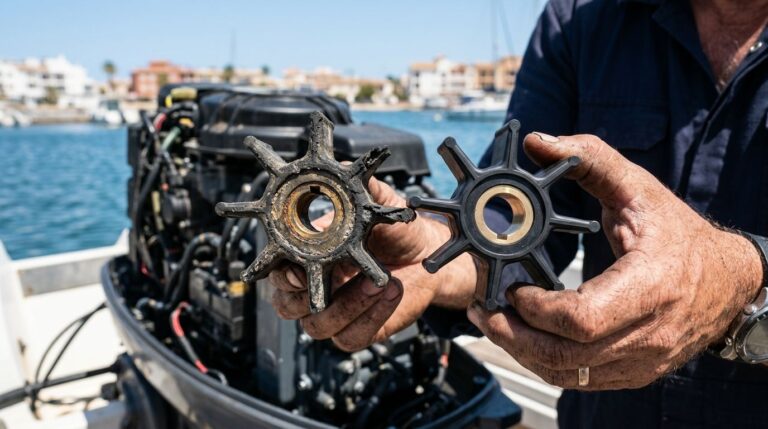
- Use the right parts. Genuine or quality-equivalent parts of the correct specification: marine-rated fuel hose, stainless or marine-grade clamps, impellers for your exact pump. Car parts are not a substitute for marine parts.
- Inspect, not just replace. Changing the oil is easy. Spotting a weeping water pump seal, a hairline crack in an exhaust elbow or a chafed fuel line is where the experience shows.
- Keep the old parts. You should be able to see the old impeller, filters and anodes. It shows the work was done and tells you how the boat is wearing.
- Take photos. Especially of things you can’t easily see yourself, like the back of the engine or the condition of the drive.
- Respect your boat. Clean hands, covered upholstery, no oily footprints on the deck. It sounds small, but it says a lot.
After the work
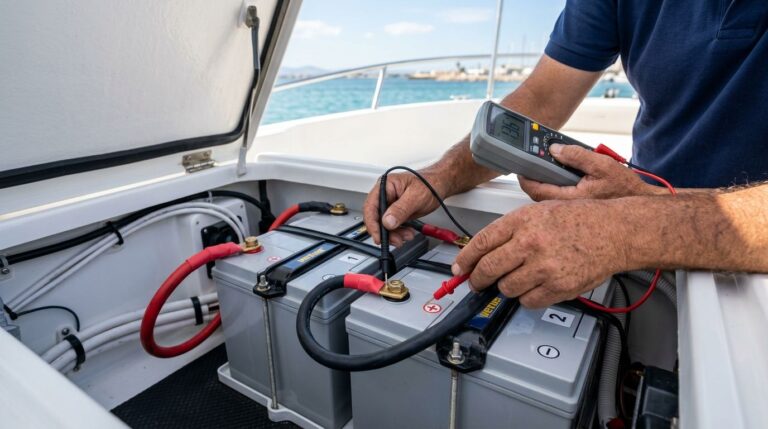
A sea trial. Any significant service or repair should finish with the boat running under load, with temperatures, pressures, charging voltage and maximum RPM checked against the specification.
A written report. This is the part most often missed. The report should list:
- What was replaced, with part numbers where relevant.
- What was inspected and found to be fine.
- What was found to be worn, and how urgent it is: now, this season or next year.
- Engine hours at the time of the service.
That report becomes your boat’s service history, which matters when you come to sell, insure or claim.
Red flags
- A price that changes after the work is done, without a call first.
- No old parts, photos or report.
- “It just needs a new engine” without a proper diagnosis, compression test or oil analysis.
- Reluctance to explain what was done in plain language.
Questions worth asking your mechanic
- Which engines and drives do you work on most often?
- Are you happy to work on my boat at its berth, or does it need lifting?
- Will you call me before doing anything beyond the quote?
- Can I have the old parts and a written report?
- What would you prioritise on my boat if the budget is limited?
How we work
At Marine Services we service and repair outboards, sterndrives and inboard diesels on craft of all sizes, from Torrevieja to the Mar Menor and Cartagena. You get a fixed quote, a phone call before any extra work, your old parts back and a clear written report. Book a service or read more about our fault finding service.